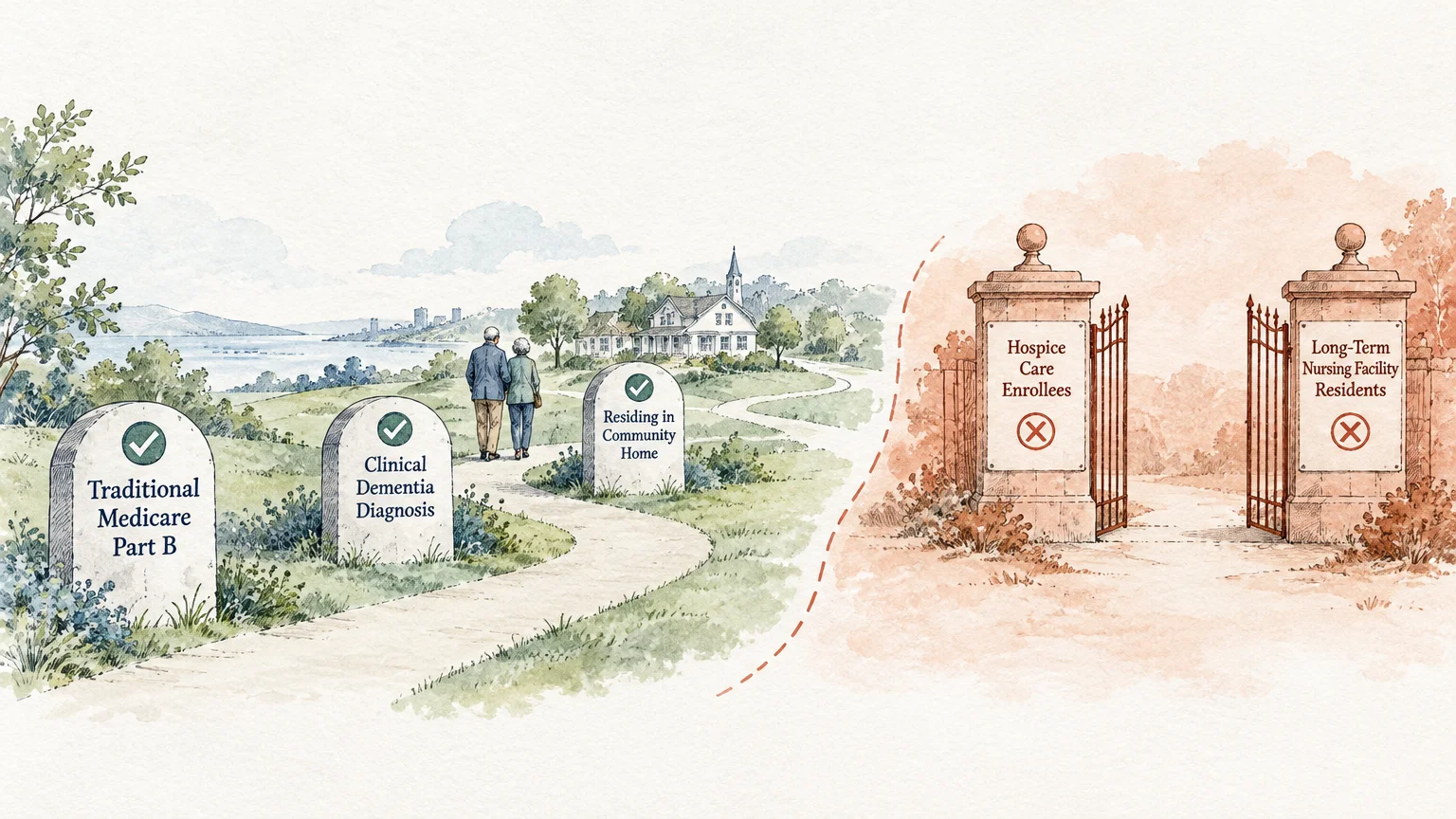
Eligibility Rules and Critical Plan Exclusions
Because the GUIDE model is an experimental Medicare innovation project, strict federal rules govern participation. Your loved one must meet clinical, geographic, and insurance requirements before enrolling.
Families who suspect cognitive decline but do not yet have a clinical assessment should monitor early symptoms of Alzheimer’s before scheduling an evaluation.
First, the patient must have a confirmed diagnosis of dementia ranging from mild to severe cognitive impairment. Second, the patient must live at home or in an assisted living community, rather than a skilled nursing home.
Third, to access the $2,625 annual respite allowance, the patient must have moderate-to-severe dementia. They must also have a documented, unpaid family caregiver who handles their daily care needs.
Insurance Restrictions and Disqualifications
Your loved one must be enrolled in Original Medicare (Part A and Part B) as their primary coverage, paying medical claims directly rather than through an intermediary.
Beneficiaries enrolled in Medicare Advantage plans are excluded from the GUIDE model. This disqualification applies to all private Medicare Advantage plans, including specialized Chronic Condition Special Needs Plans.
Individuals enrolled in the Program of All-Inclusive Care for the Elderly (PACE) are also ineligible for GUIDE. Similarly, patients who elect the Medicare hospice benefit cannot participate in the model concurrently.
Finally, your doctor or clinical group must be an active, approved participant in the CMS GUIDE program. If your current physician does not participate, your loved one cannot receive GUIDE benefits through that office.