
Racing thoughts often sabotage your ability to fall asleep, leaving you staring at the ceiling for hours. Learning the 4-7-8 breathing method gives you a reliable tool to calm your nervous system tonight.
This simple technique regulates your airflow and cues your brain to power down before bed. By pairing extended exhales with steady counts, you physically interrupt the stress response.
Instead of tossing and turning, you can lower your heart rate and ease into deeper, more restorative rest in minutes.
How the 4-7-8 Technique Quiets Your Body
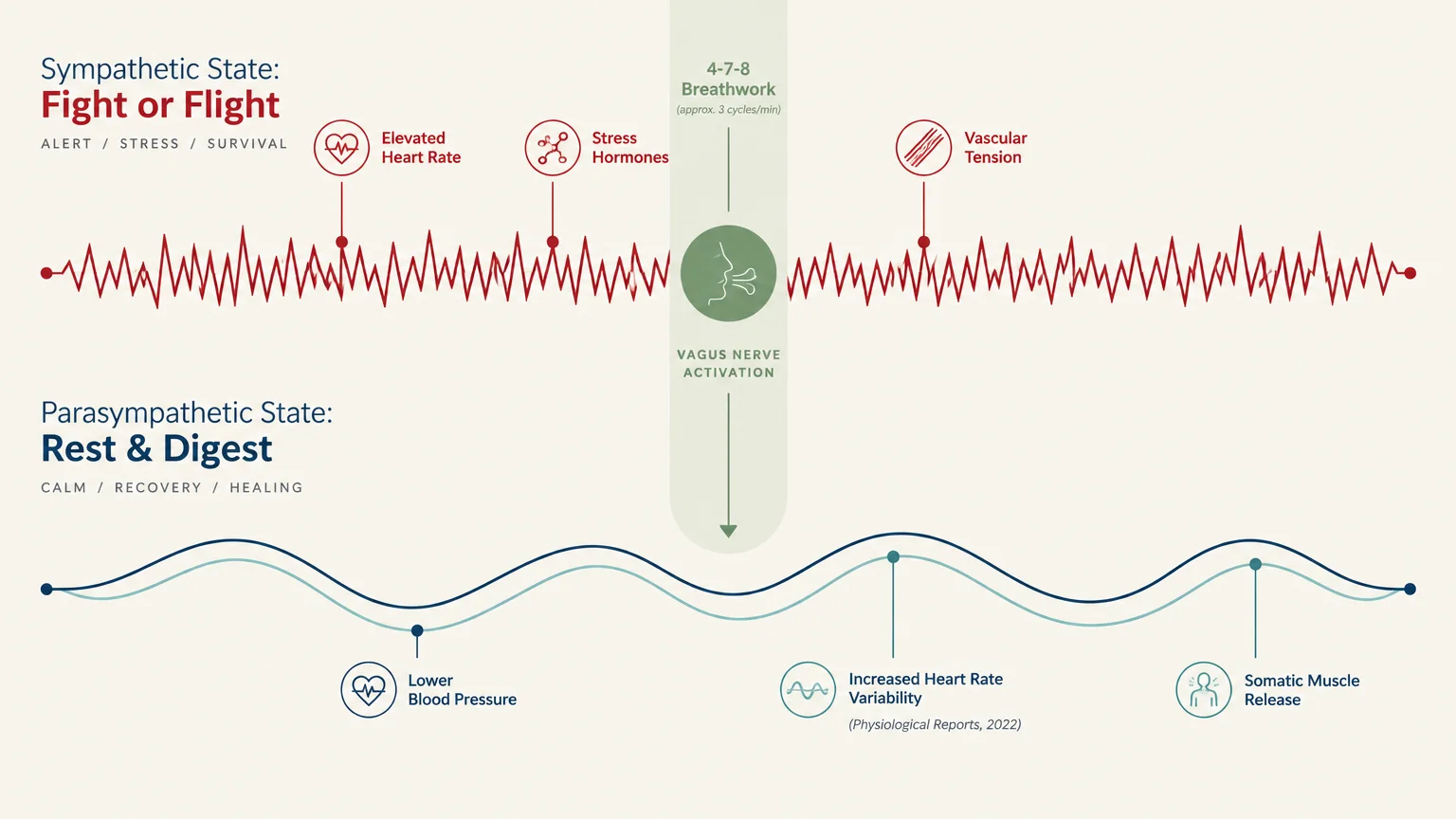
When stress keeps you awake, your sympathetic nervous system stays locked in fight-or-flight mode. This state elevates your resting heart rate and floods your bloodstream with stimulating hormones.
The 4-7-8 pattern counters this arousal by deliberately engaging your vagus nerve. By slowing your breath to roughly 3 cycles per minute, you switch control over to the parasympathetic nervous system.
A July 2022 clinical study published in Physiological Reports confirmed this exact mechanism. Researchers observed that the technique measurably improves heart rate variability and lowers blood pressure in healthy adults.
This shift signals your vascular system to relax, dissipating tension throughout your muscles. Consequently, your biological readiness for slumber surges as physical anxiety subsides.
Aligning Breathwork with Your Natural Sleep Rhythms
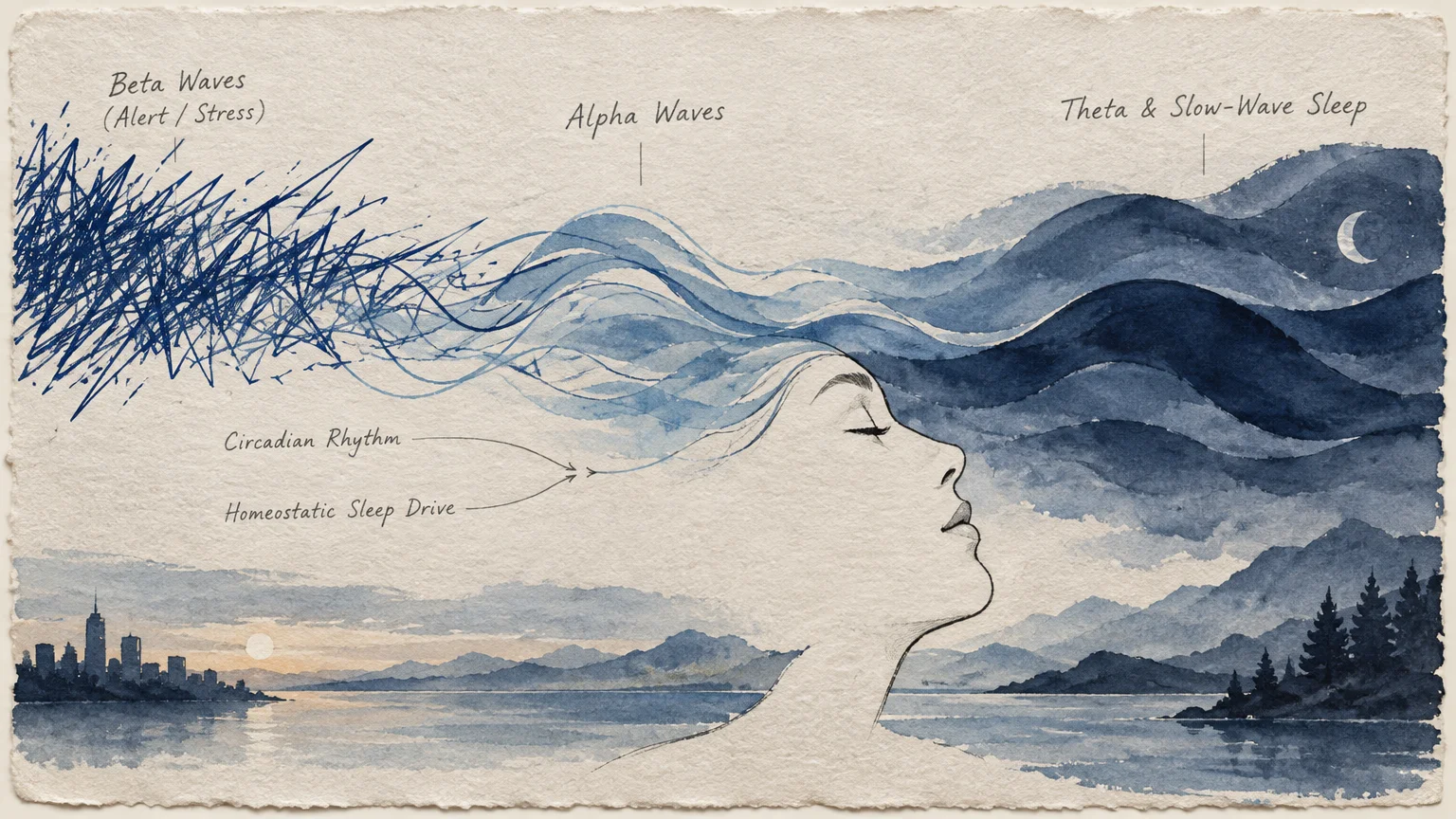
Your body relies on two primary forces to initiate slumber: your internal circadian rhythm and your homeostatic sleep drive. While adenosine builds your appetite for sleep, an overactive brain can block the transition.
According to the Centers for Disease Control and Prevention, roughly 1 in 3 adults sleeps less than the recommended 7 hours each night. Mental stress often prevents people from acting on their natural biological exhaustion.
Slowing your respiration bridges the gap between feeling tired and actually drifting off. It encourages your brain waves to decelerate from rapid beta patterns into restful alpha and theta rhythms.
This gentle neural slowdown protects the entry into light sleep stages. From there, your brain smoothly progresses into deep slow-wave and REM cycles without abrupt nocturnal awakenings.
What Clinical Studies Reveal About 4-7-8 Breathing
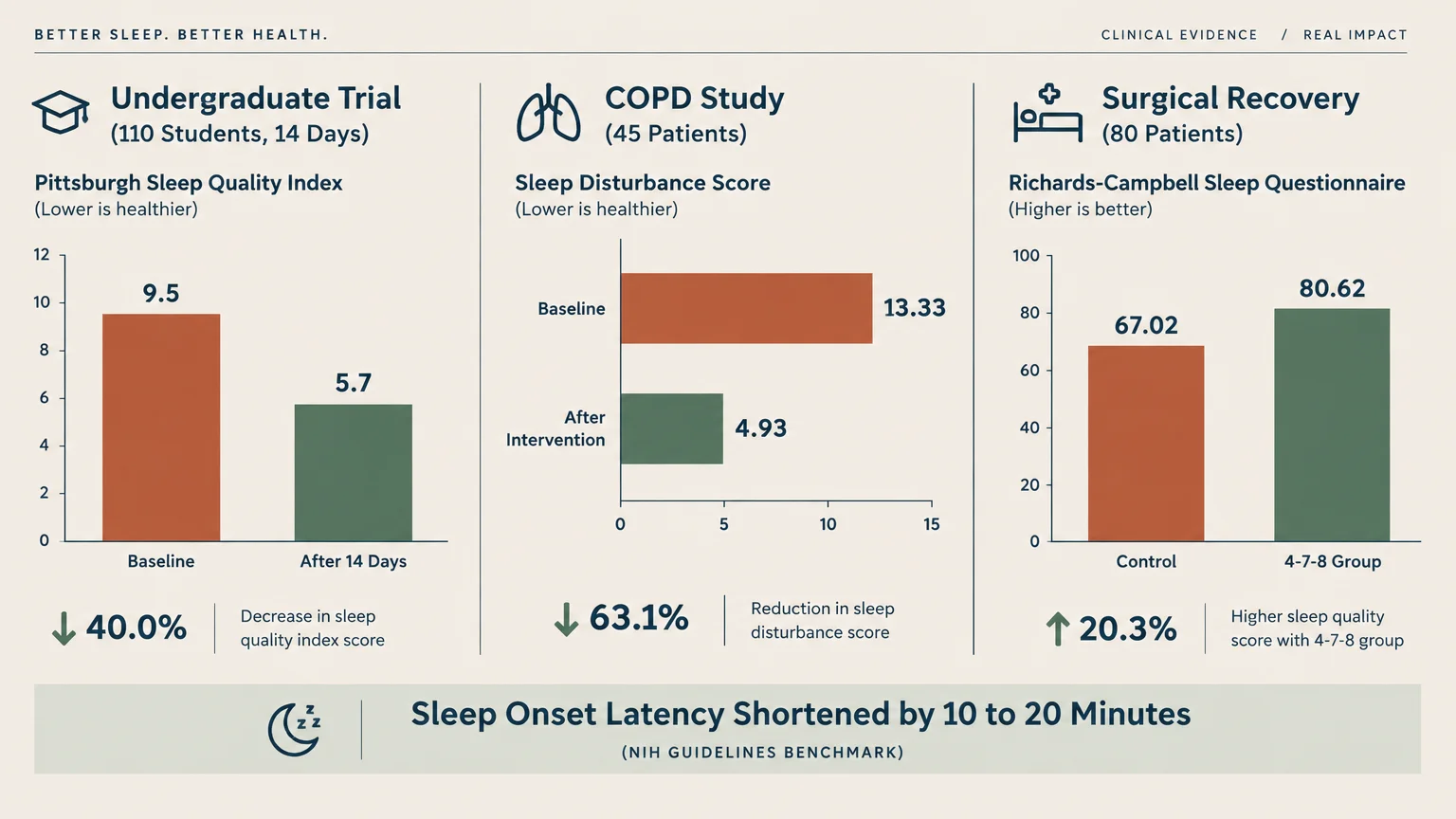
Recent clinical trials demonstrate tangible sleep benefits from this structured breathing sequence. In January 2026, researchers tracked 110 undergraduate students practicing the 4-7-8 rhythm twice daily for 14 consecutive days.
The participants experienced significant sleep improvements, dropping their average Pittsburgh Sleep Quality Index scores from 9.5 down to 5.7. A lower score on this index indicates much healthier rest.
Another study published in October 2025 examined 45 patients managing Chronic Obstructive Pulmonary Disease. After adopting 4-7-8 breathing, their mean sleep disturbance scores dropped drastically from 13.33 to 4.93.
Furthermore, a trial involving 80 surgical patients evaluated sleep quality using the Richards-Campbell Sleep Questionnaire. Patients practicing the exercise achieved an average score of 80.62, while the control group averaged just 67.02.
Clinical guidelines from the National Institutes of Health define normal sleep onset latency as 10 to 20 minutes. Controlled relaxation trials show that focused pacing shortens that initial waiting period by 10 to 20 minutes on average.
Step-by-Step Instructions for Bedtime Practice
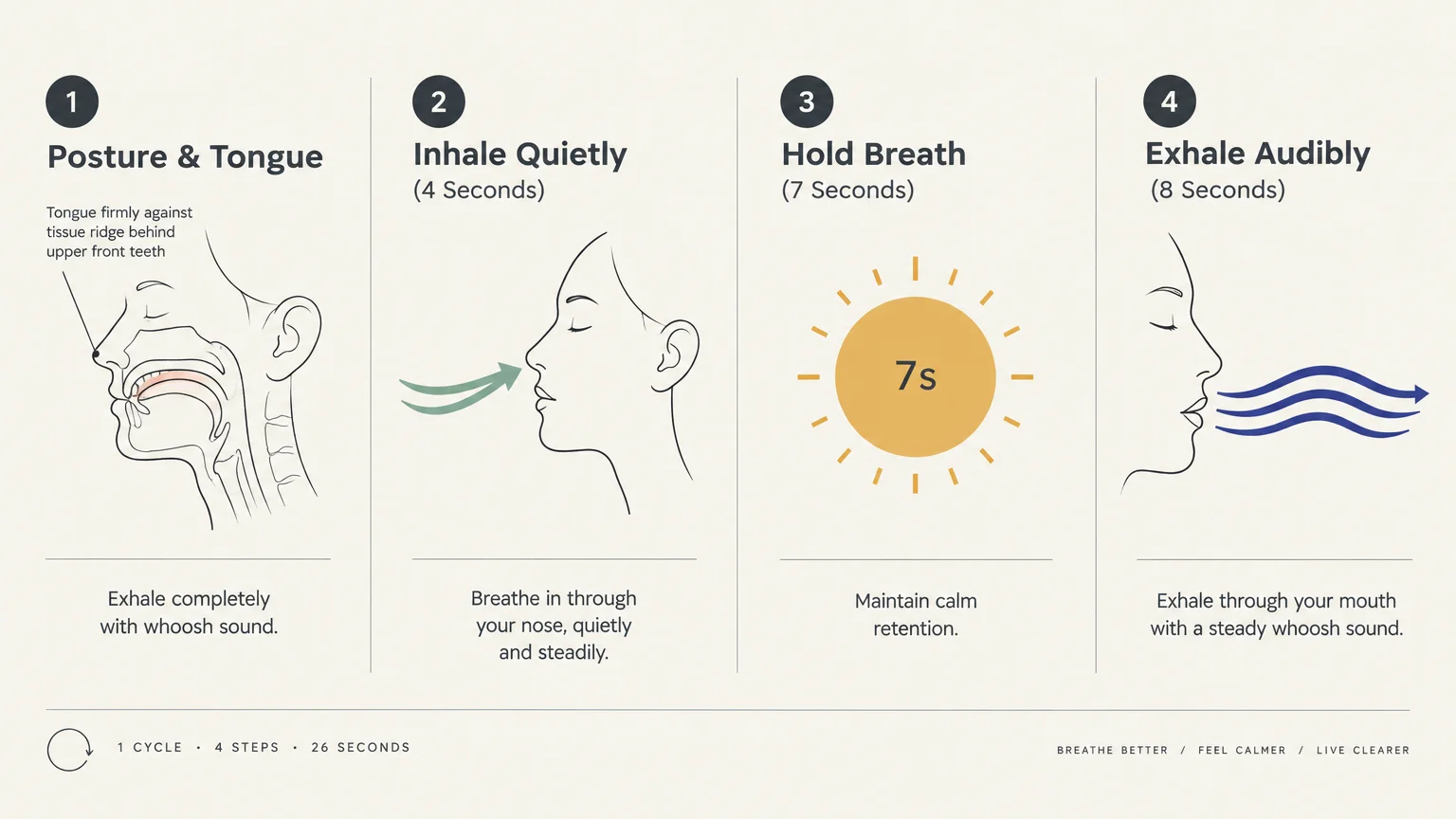
You can practice this method lying flat in bed or sitting upright in a comfortable chair. Keep your back straight, rest your tongue behind your upper front teeth, and prepare to breathe quietly.
First, exhale completely through your mouth, making a gentle whooshing sound as you empty your lungs. This full exhale prepares your diaphragm for a fresh, deliberate cycle.
Next, close your lips and inhale quietly through your nose for a mental count of 4 seconds. Focus entirely on feeling your abdomen expand rather than raising your chest.
Hold your breath steadily for a count of 7 seconds without straining your throat. This retention phase allows your blood to oxygenate fully while maintaining internal calm.
Finally, exhale forcefully through your mouth for 8 full seconds, creating another audible whoosh. Releasing air for double the inhale duration triggers immediate nervous system relaxation.
Repeat this four-part cycle 4 times initially, avoiding the urge to speed through the counts. As your body adapts over several weeks, you can gradually expand your practice to 8 cycles.

Realistic Expectations and What to Avoid
Do not expect instant sedation on your very first evening. While your body will relax, training your autonomic responses requires steady, consistent repetition over several weeks.
If holding your breath for 7 seconds causes lightheadedness, modify the timing while preserving the ratio. You can inhale for 2 seconds, hold for 3.5, and exhale for 4 instead.
Avoid practicing immediately after heavy meals or intense exercise, as full digestion can make deep diaphragmatic holds uncomfortable. Dedicate your practice to the quiet window right before you shut off the lights.

When Sleep Difficulties Warrant Professional Care
Breathing exercises provide robust behavioral support, but they cannot cure underlying physiological sleep disorders. This general wellness guidance cannot substitute for tailored medical care.
Consult a physician if you experience loud snoring accompanied by gasping, choking, or morning headaches. According to the National Health Service, these symptoms often point to obstructive sleep apnea.
You should also seek expert evaluation if your insomnia persists for months despite good sleep habits. A sleep medicine specialist can offer evidence-based treatments like Cognitive Behavioral Therapy for Insomnia.
Frequently Asked Questions
Can 4-7-8 breathing cause dizziness?
Holding your breath or exhaling slowly can sometimes cause mild lightheadedness in beginners. If you feel dizzy, pause the exercise, breathe normally, and resume using slightly shorter counting increments.
How long does it take for 4-7-8 breathing to work?
Physiological calming occurs within minutes, but noticeable improvements in nightly sleep onset often take 2 to 4 weeks. Daily practice trains your brain to associate the rhythm with sleep readiness.
Can I do the 4-7-8 exercise during the day?
Yes, practicing during daytime stress spikes trains your nervous system to regulate tension faster. Calming daytime anxiety directly reduces the residual mental hyperactivity that disturbs nighttime rest.
Is 4-7-8 breathing safe for everyone?
Most healthy adults can safely use this method without any complications. However, individuals with asthma, severe respiratory ailments, or cardiovascular issues should consult their healthcare provider first.
Your Next Step Tonight
Tonight, set your phone aside 10 minutes before turning off the bedside lamp. Lie on your back, rest your hands on your stomach, and complete just 4 cycles of 4-7-8 breathing.
Pay close attention to the soothing sensation of the prolonged 8-second exhale. This single, simple habit will train your body to welcome restorative rest with confidence.