
Racing thoughts at night can shatter your rest and leave you exhausted before morning arrives. Tonight, you can calm your nervous system and reclaim deep sleep with proven, targeted behavioral adjustments.
Stress insomnia triggers an evolutionary fight-or-flight response that locks your brain in high alert. When cortisol surges, your body actively resists its natural drive to sleep.
You can disarm this biological tension before your head touches the pillow. The following practical techniques will steady your heart rate, quiet your mind, and invite restful sleep tonight.
Understanding the Physiology of Stress Insomnia
When chronic tension mounts, your body floods your bloodstream with adrenaline and cortisol. This survival mechanism primes your muscles for action, but it directly sabotages your ability to rest.
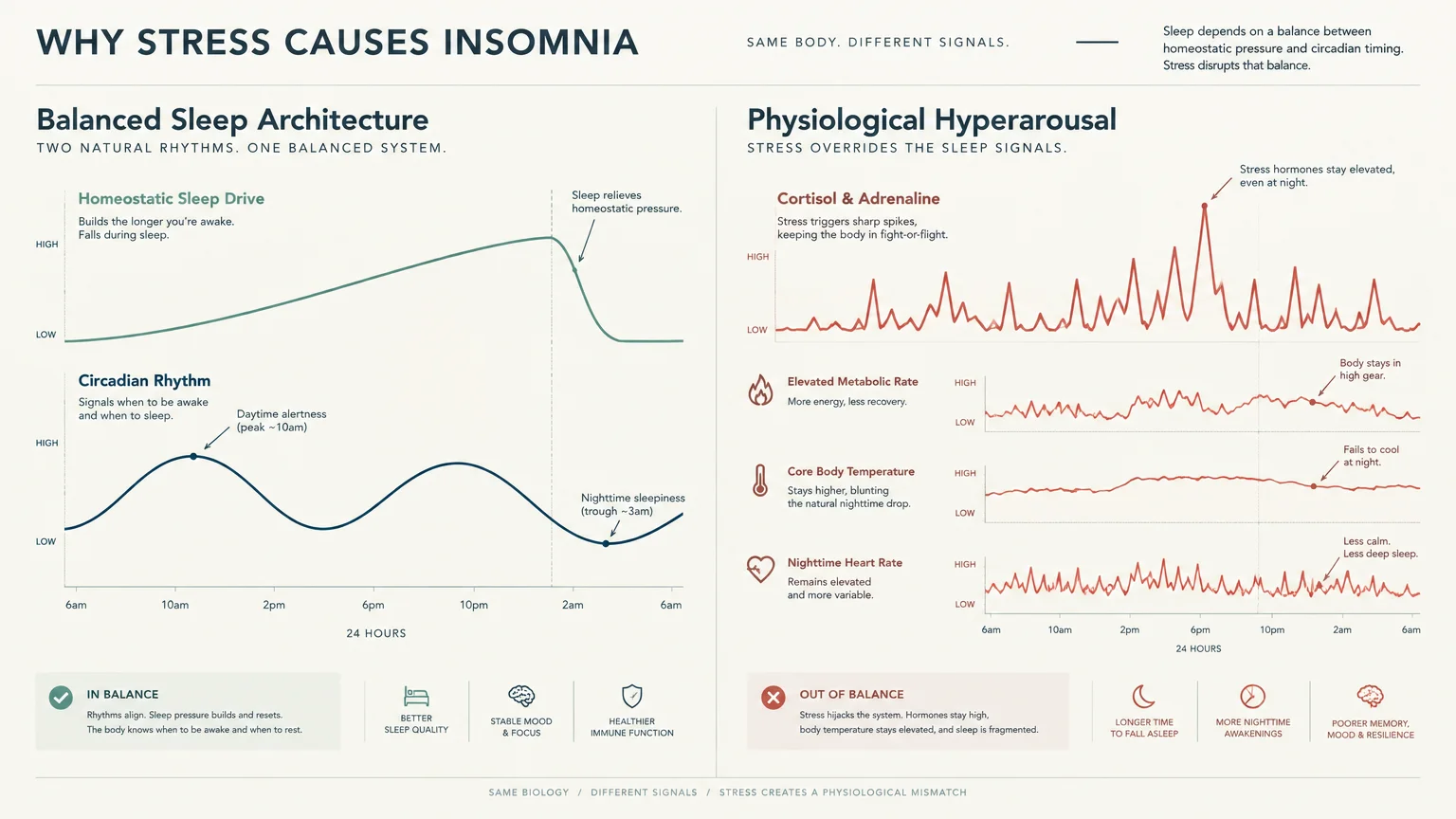
Your sleep architecture depends on two primary engines: your homeostatic sleep drive and your circadian rhythm. Sleep drive builds up during your waking hours, creating natural pressure to rest as the day concludes.
Meanwhile, your circadian clock uses light exposure to orchestrate hormone production throughout a twenty-four-hour cycle. When stress intervenes, it disrupts this delicate balance by creating a state of physiological hyperarousal.
According to the National Institutes of Health, hyperarousal elevates metabolic rate, core body temperature, and nighttime heart rate. Consequently, your brain remains vigilant even while your body feels completely depleted.
This biological mismatch causes racing thoughts at night and leaves you staring at the ceiling. Countering this surge requires conscious techniques that signal safety directly to your central nervous system.

Proven Strategies to Quiet Racing Thoughts at Night
To overcome sleep and anxiety, you must actively guide your nervous system from sympathetic arousal into parasympathetic relaxation. Structured behavioral strategies achieve this shift far more effectively than sheer willpower alone.
Shift Your Autonomic State with Breathwork
Controlled breathing acts as a direct brake on your body’s stress response. Slow, prolonged exhalations stimulate the vagus nerve, which immediately lowers your resting pulse and reduces blood pressure.
Practice the four-seven-eight breathing method when you climb into bed. Inhale quietly through your nose for four seconds, hold your breath for seven seconds, and exhale completely through your mouth for eight seconds.
Repeat this cycle four times consecutively. The extended exhalation communicates safety to your brain, dispelling panic and easing physical tension.
Break the Bed-Worry Association
If you toss and turn for more than twenty minutes, get out of bed immediately. Lingering awake trains your brain to associate your mattress with frustration, vigilance, and dread.
Clinical sleep specialists call this principle stimulus control therapy. Move to a dimly lit room and read a physical book or listen to calming audio until sleepiness returns.
Return to bed only when your eyelids feel heavy and you can barely stay awake. Protecting this boundary preserves your bed as an exclusive cue for restorative sleep and intimacy.
Offload Intrusive Thoughts on Paper
Racing thoughts often stem from cognitive rumination, where your brain rehearses unfinished tasks and potential problems. You can halt this mental loop by creating an external record before bedtime.
Keep a notebook on your desk and write down every lingering worry or tomorrow’s obligations two hours before sleep. Pair each item with one realistic next action you can take in the morning.
This scheduled worry period moves abstract concerns out of your working memory. When an anxious thought surfaces later in the dark, remind yourself that the notebook already holds the solution.

Environmental and Behavioral Daytime Tweaks
Quality sleep begins hours before you prepare for bed. Daytime behaviors build the physiological foundation that either buffers against stress or intensifies nocturnal panic.
Harness Natural Morning Light
Expose your eyes to outdoor sunlight within an hour of waking up. Sunlight halts melatonin synthesis and sets an internal timer for evening sleepiness.
The Centers for Disease Control and Prevention emphasizes that regular light exposure reinforces robust circadian rhythms. Step outside for ten to twenty minutes each morning to anchor your sleep cycle.
Curate a Buffer Zone Before Bed
Give your mind a dedicated decompression period of at least forty-five minutes before lights out. Avoid checking work emails, reading sensational news headlines, or engaging in intense discussions during this window.
Electronic screens emit blue-spectrum light that suppresses melatonin and tricks your brain into daytime awareness. Swap your phone for low-stimulation activities such as light stretching or soft instrumental music.
Optimize Your Sleep Sanctuary
Your bedroom should remain cool, dark, and quiet to support uninterrupted slumber. A cooler ambient temperature facilitates the natural drop in core body temperature necessary for deep sleep stages.
Use blackout curtains to eliminate stray street illumination, and run a fan or white noise machine to mask jarring noises. Minimizing sensory interruptions prevents your hypervigilant nervous system from waking you prematurely.

When to Consult a Doctor or Sleep Specialist
Occasional sleeplessness after a difficult day is normal; ongoing sleep deprivation is not. When stress insomnia persists across multiple weeks, professional intervention becomes essential.
Consult a primary healthcare provider if your sleep difficulties last longer than three nights a week for three consecutive months. Long-term insomnia rarely resolves through basic sleep hygiene alone and often requires structured clinical care.
According to clinical guidelines from the National Health Service, cognitive behavioral therapy for insomnia serves as the gold-standard treatment. This structured therapy directly rewires the chronic behavioral patterns that perpetuate nighttime anxiety.
Seek medical evaluation immediately if you experience loud snoring punctuated by gasping, daytime sleepiness that impairs driving, or severe panic attacks. This article provides general wellness information and does not substitute for personalized medical diagnosis or therapy.
Frequently Asked Questions
Why does anxiety always spike right when I lie down in bed?
During the day, external activities and conversations distract your conscious awareness from underlying stress. When you lie down in quiet darkness, external sensory inputs disappear, allowing buried worries to rush to the forefront.
Should I stay in bed if I cannot fall asleep after an hour?
No, you should never remain in bed awake for an entire hour. Get up, sit in a comfortable chair under dim lighting, and engage in a relaxing activity until genuine drowsiness strikes.
Can taking deep breaths really stop racing thoughts at night?
Yes, because deliberate slow breathing physically downregulates your sympathetic nervous system. Slow exhalations stimulate the vagus nerve and mechanically force your heart rate to slow down, reducing mental agitation.
How long does it take to recover from stress insomnia?
Many people notice meaningful relief within three to seven nights of practicing consistent wind-down habits. Chronic patterns often require four to eight weeks of sustained behavioral therapy to fully rewire sleep confidence.
One Actionable Step to Try Tonight
You do not need to overhaul your entire lifestyle to make progress this evening. Choose one small, manageable habit that removes mental friction before bed.
Tonight, take five minutes after dinner to write down tomorrow’s top three priorities on a paper notepad. Close the pad, set it aside, and remind yourself that your evening belongs to physical recovery.